Advanced • 10 min read
Culture Concepts
Genetics, strains, and mycelial behavior — the ideas that separate a competent grower from a serious cultivator.
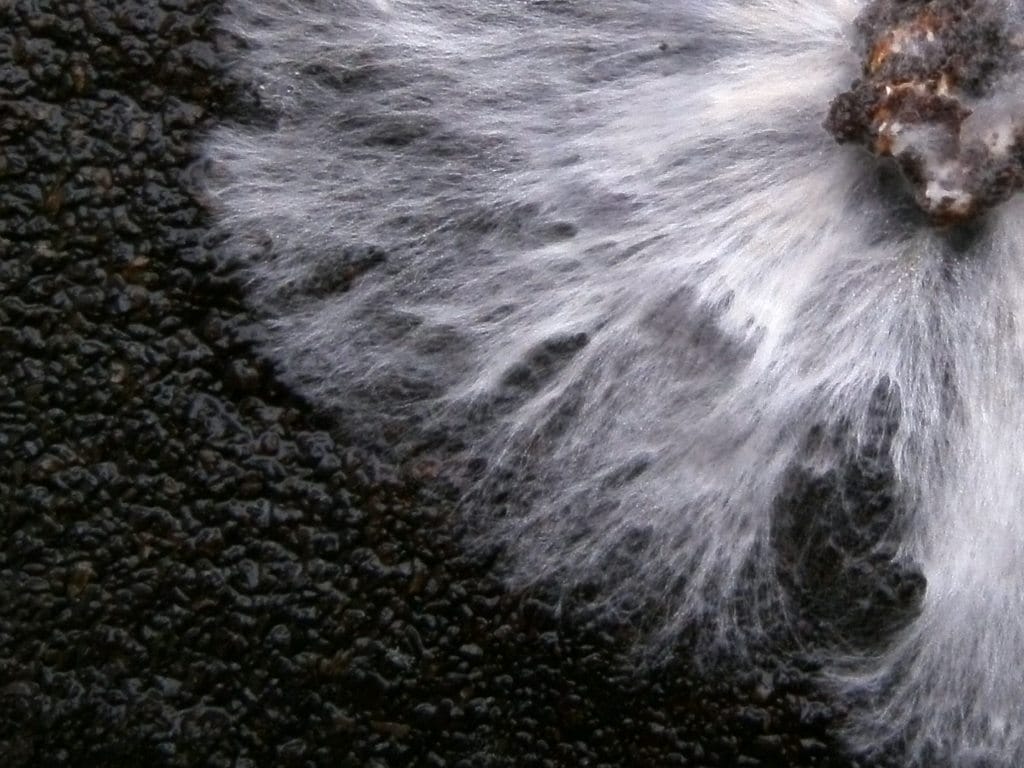
Photo: Tobi Kellner, CC BY-SA 3.0, via Wikimedia Commons
Mushroom Genetics
Fungi carry two mating types, and a fertile mycelium — a dikaryon — forms only when two compatible monokaryons fuse. This is why spore prints from a single mushroom don't breed true: every germinating spore is a genetic recombination. Commercial cultivation sidesteps this by cloning tissue from a mature mushroom onto agar, capturing a single dikaryotic genome and propagating it indefinitely. Understanding this is why serious cultivators work from cloned cultures, not spore prints.
Strains vs Species
A species is a taxonomic group — Pleurotus ostreatus, Hericium erinaceus. A strain is a specific genetic line within that species, selected for a trait: yield, cap color, cold tolerance, shelf life. Two blue oyster strains can behave very differently at the same temperature. Hoplite Farm maintains its own strain library, chosen for Pacific Northwest conditions and gourmet market quality. When you buy our spawn or blocks, you are getting one of those tested lines, not a random pull from the internet.
Mycelium Growth
On agar, mycelium spreads as a fluffy or rhizomorphic mat with characteristic patterns growers learn to recognize. Fluffy, aerial growth often indicates weaker or aging strains; dense, ropey rhizomorphs indicate vigor. On grain, colonization moves from the inoculation point outward in a predictable radial pattern. In bulk substrate, mycelium travels along paths of least resistance — packing density, moisture, and particle size all shape how the block colonizes.
Maintaining Cultures
A working culture is periodically transferred to fresh agar to prevent senescence and reduce contamination risk. Long-term storage uses slants (agar in tilted test tubes) kept refrigerated, or cryogenic storage in glycerol for master libraries. Every transfer risks minor genetic drift, so farms periodically re-clone from a strong fruit body to refresh the line. Contamination discipline at this stage is absolute — one bad transfer can wipe out a strain.
Commercial Applications
Farms select strains for the traits that matter to their market: high yield per block, uniform cluster form, dense flesh for chef use, tolerance of imperfect climate control, resistance to bacterial blotch. Over years, a farm's library becomes its most valuable asset — irreplaceable, quiet infrastructure behind every bag that leaves the door. This is why cultivation is as much a genetics program as a growing operation.