Beginner • 12 min read
How Mushrooms Grow
A complete beginner's guide to how mushrooms grow — from spore to harvest — and how commercial gourmet cultivation actually works.
The Mushroom Lifecycle
A mushroom is the fruiting body of a fungus — the reproductive structure of a much larger organism living out of sight. The full lifecycle moves through six stages. Spores: microscopic reproductive cells released from a mature mushroom's gills, pores, or teeth; a single fruit can release billions. Germination: when a spore lands on a hospitable substrate with the right moisture and temperature, it swells and puts out a fine thread called a hypha. Mycelium formation: hyphae from two compatible spores fuse and branch into a dense, cottony network called mycelium — the true body of the fungus. Colonization: the mycelium digests its way through the substrate (wood, straw, grain, sawdust), converting cellulose and lignin into fuel and pulling the substrate together into a firm, white-laced block. Fruiting: once fully colonized and triggered by a drop in temperature, a jump in humidity, and fresh air, the mycelium organizes itself into pins that swell into mature mushrooms over a few days. Harvest: the mushrooms are picked at peak ripeness, and the mycelium rests before flushing again. Understanding these six stages is the mental map every grower works from.
Understanding Mycelium
Mycelium is the vegetative body of a fungus — a branching, thread-like network of hyphae that lives inside soil, wood, or grain. It is often called the root system of fungi, though that is only half true: unlike plant roots, mycelium is the entire organism. Mushrooms are just the fruit. Mycelium feeds by secreting enzymes directly into its surroundings, breaking down tough organic molecules like cellulose, lignin, and chitin, then absorbing the resulting sugars and amino acids across its cell walls. That external digestion is why fungi are the planet's primary decomposers of wood. In healthy ecosystems, mycelial networks knit forest soils together, transport water and nutrients between trees, and recycle dead plant matter into new soil. In cultivation, we are simply giving a single strain of mycelium a clean, concentrated food source and the right climate to fruit on demand.
From Spawn to Mushroom
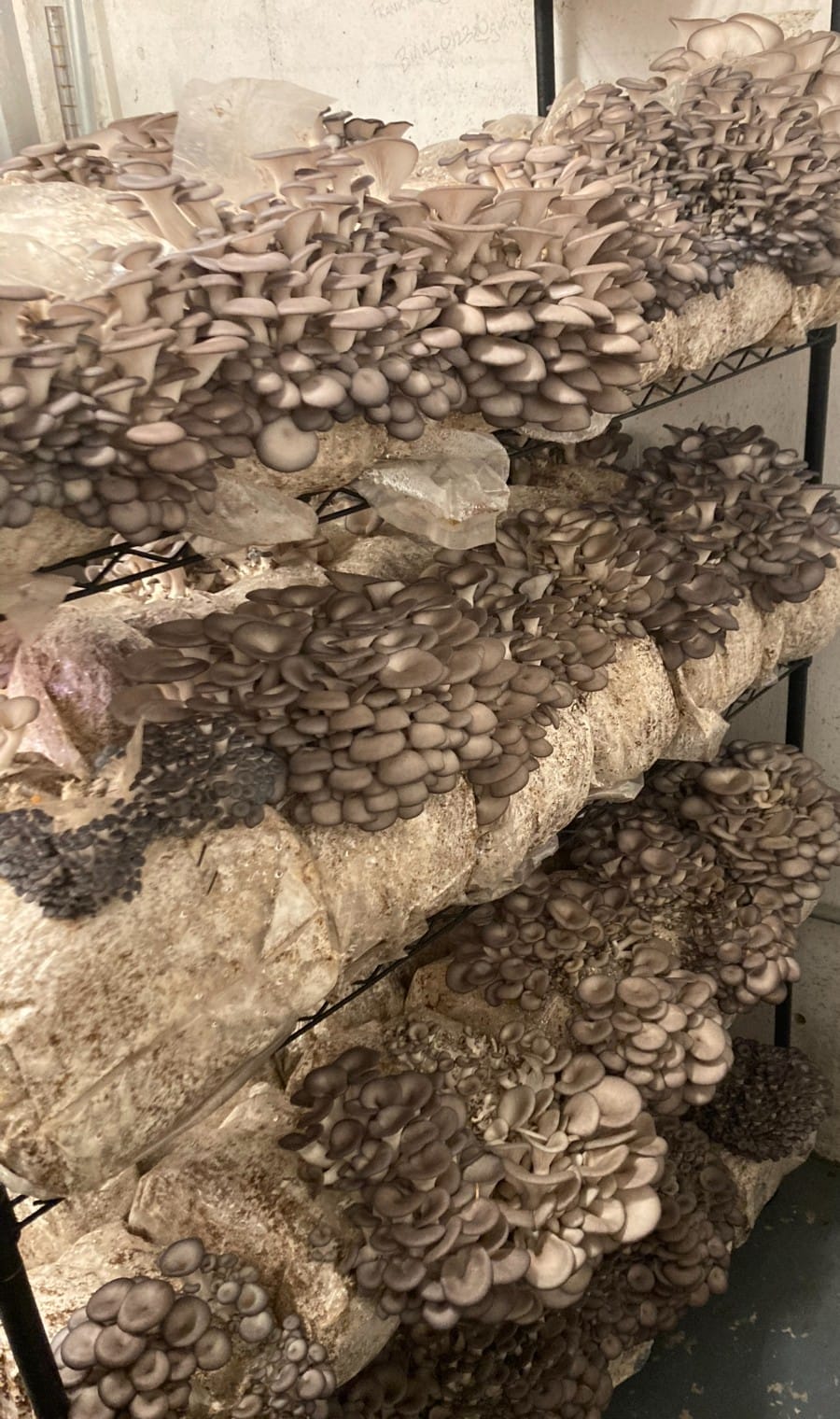
Commercial cultivation follows a predictable pipeline. Grain spawn is sterilized cereal grain — usually rye, millet, or sorghum — that has been fully colonized by a chosen mushroom strain. Grain is nutrient-dense and easy for mycelium to consume, so it acts as a high-vigor starter culture. Substrate is the bulk food the mushrooms will actually fruit from: hardwood sawdust, wheat straw, soybean hulls, or a supplemented blend, pasteurized or sterilized to eliminate competitors. Inoculation is the moment the two meet — spawn is mixed evenly into cooled substrate under clean conditions so the mycelium has hundreds of jump-off points. Colonization is the incubation phase: bags are held in the dark at a strain-specific temperature (usually 70–75°F) for two to four weeks until the substrate turns solid white. Fruiting conditions are then introduced — cooler air, higher humidity, more light, and fresh air exchange — which signal the mycelium to switch from vegetative growth to reproduction and push out mushrooms.
Creating the Right Fruiting Environment
Fruiting is a climate problem. Temperature: most gourmet species fruit best between 55°F and 70°F; oysters tolerate the wider range, Lion's Mane prefers the cooler end. Humidity: sustained 85–95% relative humidity keeps developing pins from drying out and aborting; a small tent, humidifier, or misted grow chamber is usually enough. Fresh air exchange (FAE): mushrooms breathe like animals, inhaling oxygen and exhaling CO2. Without regular fresh air, they grow long stems and tiny caps searching for it. A few gentle air swaps per hour is the target. CO2 levels: keep CO2 below roughly 1000 ppm during fruiting — high CO2 is the single most common cause of leggy, malformed flushes indoors. Light: mushrooms don't photosynthesize, but they use light as a directional cue. Indirect daylight or a cheap LED on a 12-hour timer is plenty; direct sun and total darkness both cause problems. Dial in these five variables and most cultivation problems disappear.
How Gourmet Mushrooms Are Grown
At a working farm, the process is the same as a home grow, just tighter and larger. Genetics selection: a farm maintains a library of tested strains chosen for yield, flavor, appearance, and resistance to contamination — the same species can behave very differently strain to strain. Spawn production: those strains are transferred from agar plates to liquid culture to sterilized grain in progressively larger batches inside a clean lab. Substrate preparation: hardwood sawdust and supplements are hydrated, bagged, and sterilized in an autoclave or steam retort to kill bacteria, molds, and competing fungi. Incubation: cooled bags are inoculated with grain spawn in a HEPA-filtered flow hood, then held in a temperature-controlled incubation room for two to four weeks. Fruiting: colonized blocks move into a purpose-built fruiting room where temperature, humidity, CO2, and light are controlled automatically. Harvesting: mature flushes are picked by hand, cleaned, weighed, and shipped within a day or two — freshness is the whole point of buying from a local farm.
Harvesting Mushrooms
Knowing when to pick is a skill you develop by watching a flush every day. Most gourmets are ready just before the caps flatten out and the edges begin to curl upward — that is the peak of texture, weight, and shelf life. Oysters release spores heavily once mature, so pick on the early side; Lion's Mane is ready when the teeth are 1/4 inch long and still bright white. Harvest by gripping the cluster at the base and twisting gently until it releases, or by slicing flush with the block using a clean knife — never rip, which tears the mycelium and invites contamination. After harvest, keep mushrooms cool and dry: a paper bag or open container in the fridge at 34–38°F is ideal, plastic wrap is not. Cook within a week for best flavor. If a second flush is expected, mist the block lightly, rest it for a few days, and watch for new pins.
Continue Learning
This guide is the map — the next guides are the terrain. Read How to Use a Fruiting Block for a step-by-step walkthrough of your first grow. Read Beginner Mistakes to avoid the handful of errors that account for most failed flushes. Read Environmental Conditions for a deeper dive on humidity, FAE, and temperature control. Browse the Mushroom Species Library to learn each cultivar's flavor, texture, and growing quirks. And when you have a harvest to cook, the Recipes section is where the work pays off.