Intermediate • 11 min read
Environmental Conditions
The five environmental variables that decide whether your mushrooms are stocky and beautiful — or leggy and sad.
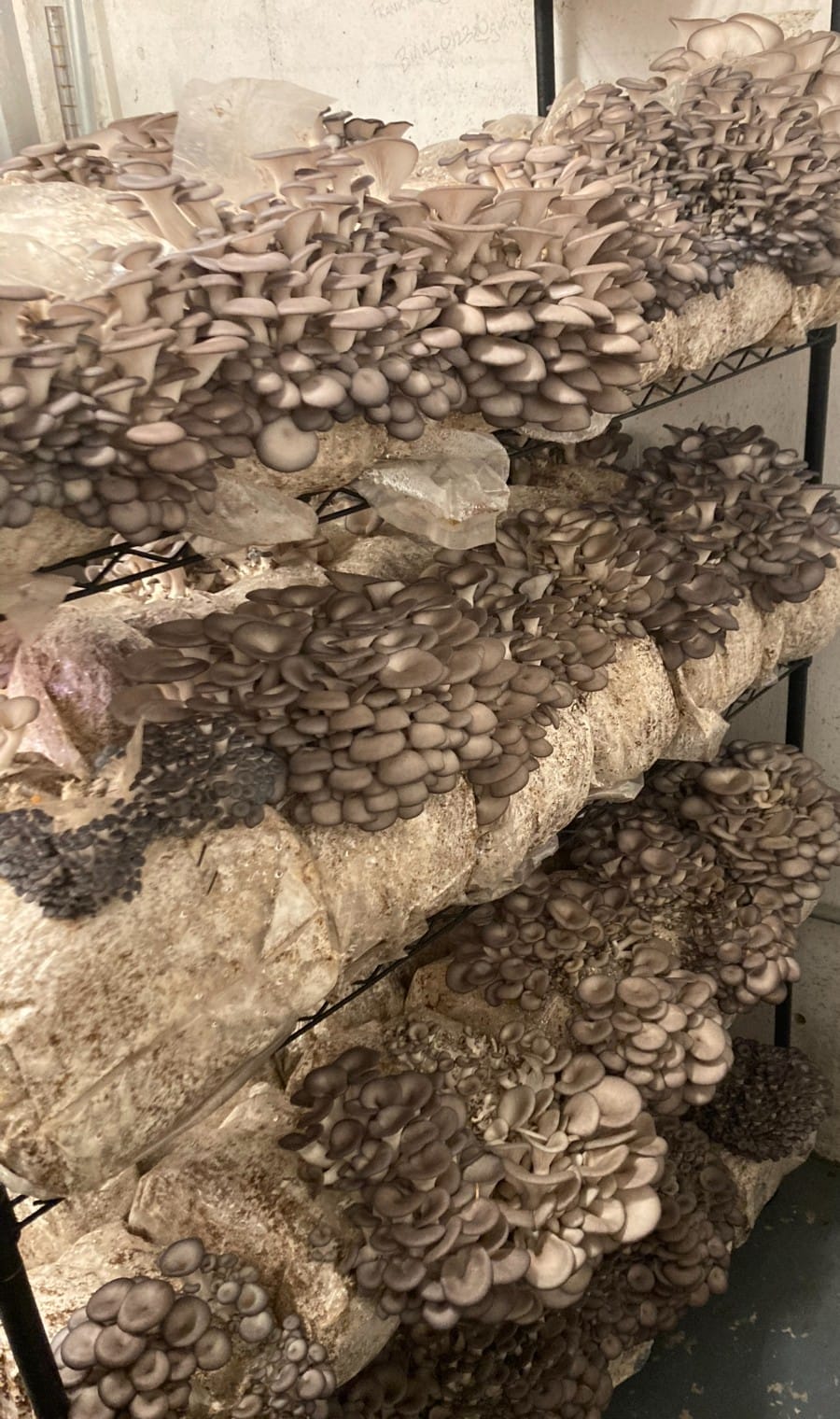
Humidity
Target 85–95 percent relative humidity during pinning and early fruiting; 80–90 percent during later development. Below 75 percent, pins crack, dry out, and abort. Above 95 percent for extended periods, bacterial slime and cap deformities appear. Measure with a cheap hygrometer inside your fruiting chamber — ambient room humidity is meaningless. Cool-mist humidifiers, hand misting, and a well-cut fruiting bag or tent all help maintain range.
Temperature
Most gourmet species fruit between 55°F and 72°F. Oysters are the widest tolerators; blue oyster likes cool, pink oyster likes warm, lion's mane prefers 60–68°F, chestnut 55–65°F. Ambient stability matters more than any single number — a rock-steady 68°F outperforms a room that averages 65°F but swings 15 degrees per day. Avoid heat sources, direct sun, and drafts.
Fresh Air Exchange
Mushrooms exhale CO2, and the local air around the block becomes oxygen-depleted quickly. Aim for at least 4–6 full air exchanges per hour during fruiting. Home growers achieve this by opening tents twice daily; small grow tents use a low-speed inline fan on a timer. Under-ventilated fruits look wispy, with long stems and undersized caps; well-ventilated fruits are stocky, dense, and heavier.
CO2 Management
Keep CO2 below 1000 ppm during pinning and fruiting. Vegetative colonization tolerates and even prefers higher CO2 (2000–5000 ppm), which is why sealed bags colonize well but must be opened to fruit. A basic CO2 meter is the single most useful upgrade an intermediate grower can make — it removes guesswork from FAE.
Lighting
Mushrooms do not photosynthesize but use light as a directional signal — they grow toward it and use its rhythm to time development. Indirect daylight or a low-wattage 6500K LED on a 12-hour timer is plenty. Direct sun overheats and dries the block; total darkness causes long, pale, disoriented growth. A shaded room with a nearby window is often ideal.
Signs of Healthy vs Unhealthy Growth
Healthy: dense white pinning, symmetrical clusters, thick stems, well-formed caps, mild forest smell. Stressed by low humidity: cracked cap surfaces, cracked stems. Stressed by high CO2: long stems, tiny caps, elongated cauliflower shapes. Stressed by low FAE: aborts, slimy patches. Stressed by heat: yellow discoloration, sour smell, slow or arrested growth. Learn to read the crop and you can fix the room before you lose the flush.
Species Differences
Blue oyster: cool and forgiving, 55–68°F, tolerates modest CO2. Pink oyster: warm-loving, 65–80°F, sensitive to cold. Lion's mane: 60–68°F, dislikes bright light and low humidity, wants steady conditions. Chestnut: cool, 55–65°F, prefers deeper indirect light and good FAE. Match the species to your available climate rather than trying to force one to fit. See the Mushroom Species Library for full profiles.